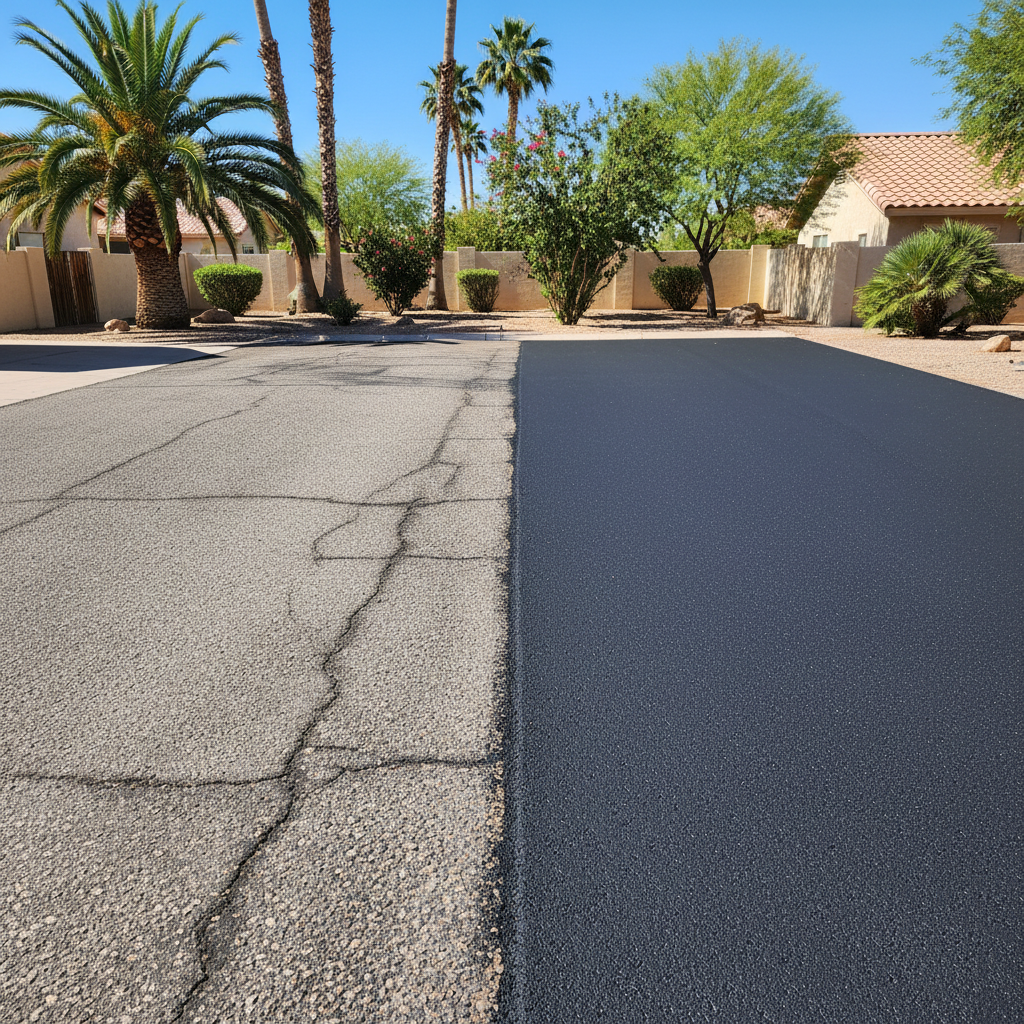
So, you're thinking about putting in a new parking lot, or maybe fixing up an old one, right here in Chandler. Good for you! It's a pretty big investment, and naturally, you want to get it right. Most folks immediately think of two main choices: asphalt or concrete. Both materials have their place, sure, but they're definitely not the same, especially when you consider our Arizona sun beating down.
People ask me all the time, 'Which one's better?' Honestly, my answer is always, 'It depends.' But I can definitely tell you what I've seen work best for homeowners in our specific neck of the woods.
Upfront Cost: What's Your Budget Looking Like?
Let's just get this out of the way first, shall we? Asphalt is almost always cheaper to install initially than concrete. We're talking a pretty significant difference here, sometimes 30-50% less per square foot. That's mainly because the materials themselves usually cost less, and the installation process is typically quicker, which means less labor time.
For a big parking area, that initial cost difference can really add up. If you're on a tighter budget but still need a solid, functional surface, asphalt often wins this round, hands down. But hey, don't let that be the only thing you think about, because the story doesn't end there.
Durability & Our Chandler Climate
Now, this is where things get interesting, especially here in Arizona. Concrete is tough, no doubt about it. It can handle heavy loads and generally lasts longer than asphalt — often 20-30 years or even more if it's installed correctly and kept up. It also doesn't soften as much in extreme heat, which is a huge plus when you're dealing with those 115-degree summer days we all know and, well, tolerate.
Asphalt, on the other hand, is more flexible. This flexibility is actually great for stopping cracks from ground movement or settling, which can happen with our expansive clay soils in some parts of Chandler. However, that same flexibility means it can get soft and pliable in intense heat. You might notice tire indentations or minor rutting if heavy vehicles sit on it during the hottest parts of the day. Typically, it lasts 15-20 years if you maintain it properly.
Where asphalt really shines in terms of durability is how easy it is to repair. Got a pothole in asphalt? We can patch it up relatively easily. A crack? We can seal it. Concrete repairs are often more noticeable and can be a lot more complex, sometimes even requiring us to replace an entire slab. What a pain!
Maintenance: What Kind of Long-Term Commitment Are We Talking?
Look, no paving material is truly maintenance-free, so don't believe anyone who tells you otherwise. Both need some attention, but the kind of attention they need is different.
- Asphalt: You'll spend more time and money on this over its lifespan, but it's usually smaller, more frequent tasks. You'll need to sealcoat your asphalt every 2-5 years. This isn't just for looks; it protects the surface from UV rays, water, and oxidation. Think of it like sunscreen for your driveway. You'll also need to fix cracks and small potholes as they show up to keep them from getting worse.
- Concrete: Less frequent maintenance here, but when it needs it, it can be a much bigger job. You'll want to seal it every 5-10 years, maybe, to protect against staining and moisture. Cracks in concrete are more common with our temperature swings and can be harder to repair without it looking obvious. If a slab cracks badly, you might be looking at replacing that whole section.
So, with asphalt, you're doing more frequent, smaller jobs. With concrete, you're doing less frequent, but potentially larger jobs.
Appearance & Curb Appeal
This part is pretty subjective, but there are some general trends you'll see.
- Asphalt: It's black, plain and simple. It gives a clean, uniform look, especially after a fresh sealcoat. It contrasts nicely with landscaping and can give your property a very professional, sleek appearance.
- Concrete: It's typically light gray, though you can get it colored or stamped for a decorative look. This can be a huge aesthetic advantage if you want something more custom or decorative for your home's entrance. The lighter color also absorbs less heat, which can make a small difference in the ambient temperature around your parking area.
My Recommendation for Chandler Homeowners
Alright, so what's the final word for us here in Chandler? For most homeowners looking to pave a parking lot, I lean towards asphalt, but with one big caveat.
Here's why:
- Cost-Effectiveness: The initial savings are pretty significant. For a residential parking area, that money can often be better spent elsewhere on your home, don't you think?
- Repairability: Our intense heat and occasional monsoons mean things shift around. Asphalt's ability to be easily patched and sealed makes it much more forgiving. If you get a crack, it's usually a straightforward fix for us at Chandler Asphalt Paving.
- Heat Absorption: While concrete is lighter, a well-maintained asphalt surface doesn't actually get *that* much hotter than concrete in direct sun, and the flexibility it offers in our climate often outweighs the slight temperature difference.
The caveat? You absolutely, positively, must commit to the maintenance. If you're not willing to sealcoat every few years and take care of small issues as they pop up, then asphalt isn't for you. Neglect an asphalt parking lot here in Chandler, and it'll break down fast.
If you're after a very specific look, or if you have extremely heavy vehicles constantly on your lot and want the absolute longest lifespan with minimal fuss (and don't mind the higher upfront cost), then concrete might be worth considering. But for the average Chandler homeowner, asphalt offers the best balance of cost, performance, and repairability, provided you take care of it.
Give us a call if you want to talk specifics about your property. We're happy to come out and give you an honest assessment.