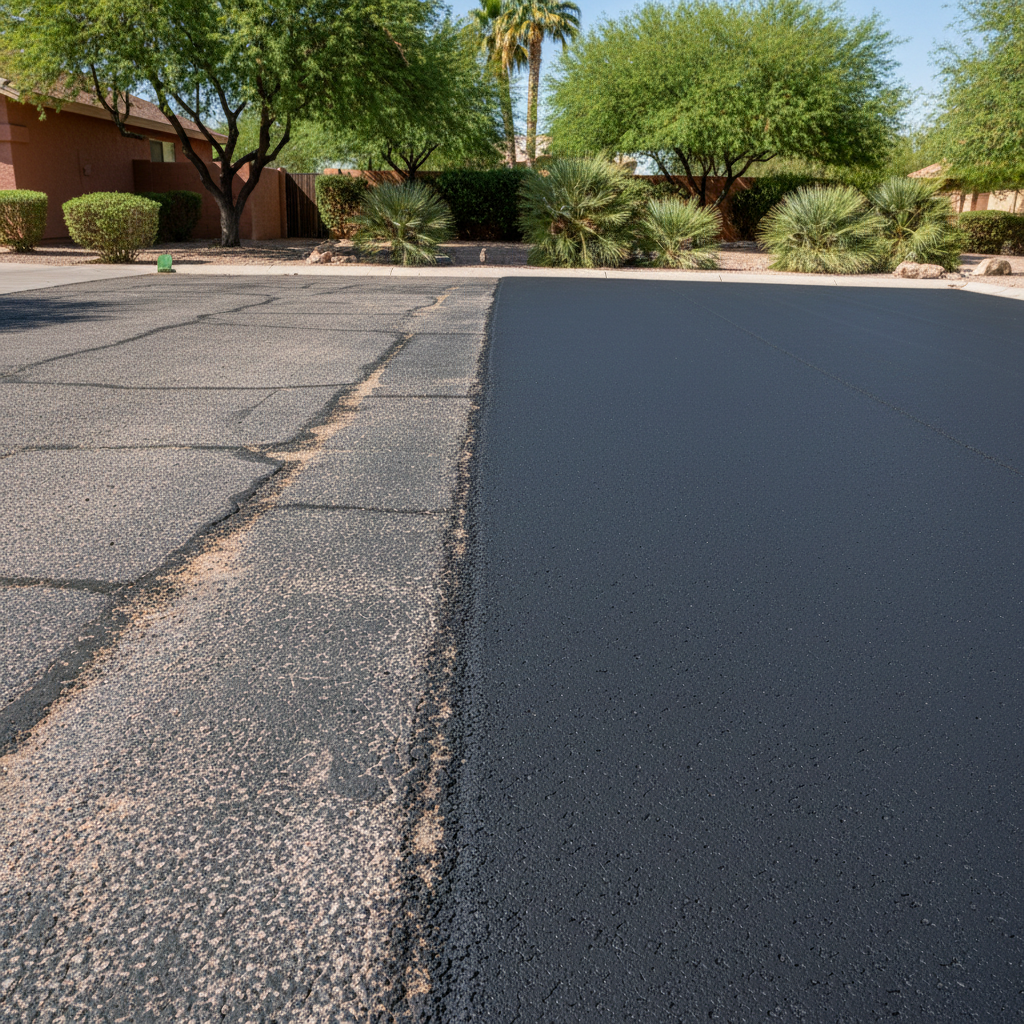
Alright, let's talk parking lots for a minute. If you've got a decent-sized property here in Chandler – maybe a home with a detached garage, a rental unit, or even a small business lot – you're probably weighing your options for paving. The big debate usually comes down to two main contenders: asphalt or concrete. Both have their place, sure, but for our Arizona climate and typical residential needs, one usually pulls ahead.
Upfront Cost: How Does Your Wallet Feel?
Let's be real, cost is often the very first thing on anyone's mind. Generally speaking, asphalt is almost always cheaper to install than concrete. We're talking about the initial pour here, the first time it goes down. Asphalt is a petroleum-based product, and while oil prices do fluctuate, it's typically less expensive per square foot for the material and the labor to lay it down. Concrete, on the other hand, sometimes needs more intensive preparation, and the material itself can just be pricier.
So, if your budget is tight and you need a functional surface, asphalt gives you more bang for your buck right out of the gate. That's a big plus for a lot of folks, isn't it?
Durability & Our Chandler Heat
This is where things get really interesting, especially here in the Valley. Concrete is incredibly durable, no doubt about it. It can handle heavy loads and it's pretty resistant to chemicals and oils. But concrete also cracks. It's not a matter of *if* it cracks, but *when*. Our intense summer heat, combined with the expansive clay soils we often find around places like the Ocotillo area, means concrete is constantly expanding and contracting. Those stress points eventually give way, leading to spiderweb cracks or even larger, unsightly fissures.
Asphalt, on the other hand, is more flexible. It's designed to give a little. That flexibility makes it more resilient to temperature swings and ground movement. It'll still show wear and tear, of course, but it tends to flex with the ground rather than cracking rigidly. You might see some minor rutting or depressions over time, especially in high-traffic spots, but it's often easier to repair.
Maintenance: What About the Long Haul?
This is a crucial factor for long-term ownership. Concrete is often seen as low-maintenance, and in some ways, it is. You don't usually need to seal it annually like you do with asphalt. However, when concrete *does* crack, repairs can be more involved and noticeable. Patching concrete rarely blends seamlessly, and if you have significant cracking, you might be looking at full slab replacement, which, let's face it, isn't cheap.
Asphalt needs a bit more love, but it's usually simpler love. Regular sealcoating – I recommend every 2-3 years for a residential parking lot – is key. This protects the surface from UV rays, water penetration, and keeps it looking fresh. It's a relatively quick and affordable process. When cracks do appear in asphalt, they're typically easier to fill and blend, and patching is much more effective and less noticeable than with concrete. Chandler Asphalt Paving does a lot of this kind of work, and we can usually make repairs look pretty good.
Appearance: What Look Are You Going For?
Aesthetics matter, especially for your home or business. Concrete offers a bright, clean, often lighter appearance. You can stamp it, color it, or give it different finishes. It's a very versatile material visually.
Asphalt has that classic, dark, uniform look. It's sleek and provides a great contrast for painted lines or landscaping. Some people prefer the darker, more industrial look, while others like the brighter feel of concrete. It really just comes down to personal preference here. A well-maintained asphalt lot, with fresh sealcoat, looks sharp and professional.
My Recommendation for Chandler Homeowners
Given our specific conditions here in Chandler – the intense sun, the soil movement, and the need for cost-effective, durable solutions – I almost always recommend asphalt for parking lots. It's more forgiving with our climate, generally more affordable upfront, and while it requires regular sealcoating, its repairs are usually simpler and less costly in the long run.
You get a flexible surface that stands up well to our extreme temperatures, and with proper maintenance, it'll last you a good 20-30 years, sometimes more. Concrete is a fine product, absolutely, but for a parking lot that's going to see a lot of sun and ground shifts, asphalt just makes more sense for most people.
Ultimately, the choice is yours, but I hope this breakdown helps you weigh the pros and cons for your property. If you're ready to talk specifics or get a quote, you know who to call.